Your complete guide to the historic Panchasara Parshwanath Jain Temple in Patan — with temple rules, darshan timing, and easy cab booking from Sabarmati and Ahmedabad.
Patan, the ancient capital of Gujarat, has always been more than just a historical footnote. It was once a thriving centre of trade, learning, and Jain culture during the Solanki period. Walking through its narrow lanes today, you can still feel echoes of that past — and nowhere more clearly than at the Panchasara Parshwanath Jain Temple Darshan Tour. For families from Ahmedabad and Sabarmati looking to combine heritage with pilgrimage, this temple offers exactly that rare combination: genuine spiritual significance and tangible historical weight.
The Panchasara Parshwanath Jain Temple Patan is dedicated to Lord Parshwanath, the 23rd Jain Tirthankara whose teachings on non-violence and compassion continue to guide millions of Jains worldwide. Parshwanath Bhagwan's life story is particularly moving — he was a prince who renounced all worldly pleasures after witnessing cruelty to animals, choosing instead a path of meditation and enlightenment. The idol at Panchasara, believed to be centuries old, is carved with exceptional care and radiates a calm that seems to settle over everyone who stands before it.
Patan was once home to hundreds of Jain families and dozens of temples. While many have disappeared with time, Panchasara Parshwanath Mandir Patan has survived and remains an active centre of worship. The temple trust maintains it with devotion, ensuring that the rituals, the festivals, and the daily aarti continue just as they have for generations. For pilgrims interested in Jain temples in Patan Gujarat, this is where you start.
The temple sits in the old quarter of Patan, surrounded by residential neighbourhoods and the kind of authentic street life that makes India's small towns so appealing. There is no commercial bustle here, no aggressive vendors. Just a quiet temple compound, a handful of devotees, and the soft sound of prayers echoing off stone walls. It is exactly what a pilgrimage site should feel like.
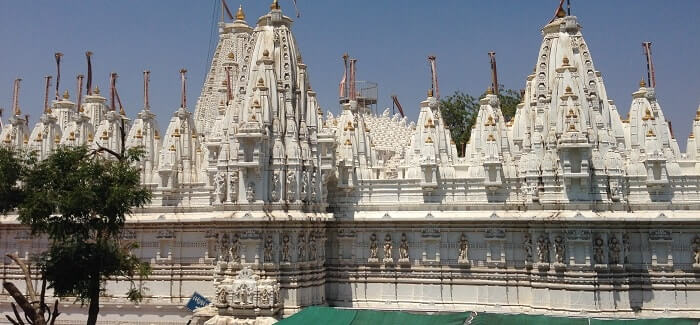
| Temple Name | Panchasara Parshwanath Jain Temple |
| Location | Patan, Gujarat |
| Main Deity | Parshwanath Bhagwan (23rd Tirthankara) |
| Temple Type | Jain Tirth |
| Distance from Ahmedabad | ~125 km |
| Best Season | October to February |
| Ideal Duration | One Day Trip |
| Entry Fee | Free |
| Combine With | Rani ki Vav, Sahastralinga Talav |

Gujarat's Jain pilgrimage map is richly populated with sacred sites, each with its own character and significance. Panchasara Parshwanath Jain Temple in Patan is one of the important stops included in the Jain Tirth Yatra in Gujarat, particularly for pilgrims who value historical Jain temples alongside natural beauty or dramatic architecture. Patan itself is a UNESCO World Heritage city thanks to the Rani ki Vav stepwell, which makes combining heritage tourism with Jain pilgrimage unusually seamless here.
The temple's importance extends beyond its age and location. Parshwanath Temple Patan Gujarat serves as a quiet reminder of the Jain community's deep roots in North Gujarat. During the medieval period, Patan was a major Jain centre. Wealthy merchants funded temples, libraries, and schools. Scholars gathered here to study texts and philosophy. While much of that infrastructure has faded, the Panchasara temple remains — a living connection to a vibrant Jain past.
For families from Ahmedabad and Sabarmati planning a comprehensive Jain tirth yatra Gujarat, Panchasara works beautifully as part of a North Gujarat circuit. It pairs naturally with Shankheshwar (just 55 km away), Taranga, and even Kumbhariya if you are heading toward Ambaji. Adinath Travels regularly arranges these multi-tirth itineraries for groups and families who want a complete pilgrimage experience rather than isolated temple visits.
Combine Panchasara Patan with Shankheshwar (55 km), Taranga (75 km), and Rani ki Vav stepwell for a perfect blend of Jain pilgrimage and heritage tourism. Two-day packages with overnight stays in Patan or Mehsana are ideal. Call Adinath Travels to plan your customised family yatra.
Explore All 20 Jain Tirth in GujaratThe story of Panchasara is intertwined with Patan's rise and fall as a major political and cultural centre in medieval Gujarat.
Patan flourished under the Solanki (Chaulukya) dynasty between the 10th and 13th centuries. It was during this period that the city earned its reputation as Anhilwad Patan — a wealthy trading hub, a centre of learning, and a patron of the arts. The Jain community was particularly influential. Many of the wealthiest merchants were Jains, and they poured resources into building temples, schools, and libraries. The Panchasara Parshwanath Temple is believed to have been constructed during this golden period, though the exact date is debated by historians.
The name "Panchasara" has multiple interpretations. Some scholars believe it refers to five sacred lakes (panch = five, sara = lake) that once existed near Patan. Others suggest it relates to five important Jain families who funded the temple's construction. Whichever story is true, the name has stuck for centuries and is now inseparable from the temple's identity.
Like many ancient Jain temple in Patan, Panchasara has weathered its share of challenges. Patan's political decline after the Solanki period led to economic hardship for the region, and many temples fell into disrepair. Panchasara survived, in part because the local Jain community never abandoned it. Through periods of prosperity and difficulty alike, daily worship continued. The temple trust, formed in more recent times, has undertaken careful restoration work to preserve the structure while maintaining its spiritual function.
Today, the temple stands as a testament to both Jain devotion and historical resilience. Walking through its courtyard, you are not just visiting a religious site — you are stepping into a piece of Gujarat's medieval past that has somehow remained alive and functional into the 21st century.
The Panchasara temple may not have the elaborate marble work of Kumbhariya or the hilltop drama of Girnar, but it has its own architectural language worth understanding.
The temple follows a traditional Jain architectural layout: an outer courtyard leads to a pillared hall (mandap), which in turn opens to the inner sanctum (garbhagriha) housing the main idol of Parshwanath Bhagwan. The proportions are modest by Solanki standards, suggesting the temple may have been built by a single family or small community rather than royal patronage. But what it lacks in scale, it compensates for in atmosphere.
The pillars in the mandap show traces of carved decoration — floral motifs, geometric patterns, and miniature figures that have worn smooth with age and countless hands brushing past them. The ceiling, though plain by comparison to grander Jain temples, has a simple elegance. Natural light filters in through small openings, creating pockets of shadow and illumination that shift throughout the day. The effect is subtle but beautiful, especially during morning and evening darshan when the light is softest.
The main idol of Parshwanath Bhagwan sits in meditation posture under a multi-hooded serpent canopy — the signature iconography of Parshwanath. The idol is black stone, polished to a soft sheen by centuries of oil lamps and ceremonial bathing. Devotees approach it with flowers, incense, and prayers, and the accumulated devotion of generations seems to hang in the air. This is not a museum piece. It is a living shrine where people bring their hopes, their griefs, and their gratitude.
The spiritual importance of the temple goes beyond its physical structure. For the local Jain community in Patan, Panchasara is the anchor of religious life — the place where children are brought for their first darshan, where marriages are blessed, where festivals are celebrated. For pilgrims from Ahmedabad and beyond, it represents a connection to Gujarat's Jain heritage and a reminder that faith does not always need grand monuments to be powerful.
Jain temples maintain specific rules rooted in the principles of non-violence, purity, and respect. Here is what you need to know before visiting Panchasara or any Jain temple in Gujarat.
Remove all leather items before entering — shoes, belts, bags, wallets. This rule stems from Jain non-violence principles. Most temples provide lockers or safe storage areas. Wear cloth or synthetic footwear that can be easily removed.
Wear clothing that covers shoulders and knees. Avoid shorts, sleeveless tops, or revealing clothing. Traditional Indian attire is ideal but not required. Simple, respectful clothing is the standard. Both men and women should follow this guideline.
No non-vegetarian food, alcohol, tobacco, or strong-smelling foods (onion, garlic) should be brought to temple premises. Many Jain temples request that visitors avoid these items even before arriving. This maintains the temple's sanctity and purity.
Photography is generally prohibited inside the main sanctum where the deity resides. Courtyard and exterior photos may be allowed — ask temple staff first. Never use flash photography near idols. Respect other devotees' privacy and prayer time.
Keep voices low and respectful. Avoid loud conversations, phone calls, or disruptive behaviour. The temple is a place of meditation and prayer. If visiting with children, help them understand the importance of quiet reverence in sacred spaces.
Do not touch idols or temple artifacts unless specifically permitted during rituals. Follow the temple's specific guidelines for offerings. Walk clockwise around the sanctum if circumambulation is practiced. Ask permission before sitting in meditation areas.
Temple rules can vary slightly between different Jain sects and individual temples. If you are unsure about any specific guideline at Panchasara Parshwanath Temple, simply ask a temple volunteer or priest. Jain communities are generally welcoming to sincere visitors who show respect for their traditions. A polite question is always better than an unintentional offense.
Patan is perfectly positioned for a comfortable same-day yatra from Ahmedabad or Sabarmati, with good road connectivity throughout the year.
| From | Distance | Travel Time | Route | Suggested Start Time |
|---|---|---|---|---|
| Sabarmati / Jawahar Chowk | ~120 km | 2 hrs | NH947 via Mehsana | 7:30–8:00 AM |
| Ahmedabad (City) | ~125 km | 2.5 hrs | NH947 via Mehsana | 7:30–8:00 AM |
| Gandhinagar | ~135 km | 2.5 hrs | Via Mehsana | 7:30 AM |
| Mehsana (Nearest City) | ~40 km | 45 min | Direct road | Any time |
| Shankheshwar (Combined Tour) | ~55 km from Patan | 1 hr | Via Sami | After Patan darshan |
Transparent, all-inclusive pricing for Jain pilgrimage taxi Ahmedabad. All packages cover Panchasara darshan with optional Rani ki Vav visit.
Combine Panchasara Patan with Rani ki Vav UNESCO stepwell, Sahastralinga Talav, and Shankheshwar temple for a complete North Gujarat heritage and Jain pilgrimage tour. Two-day itineraries are also available for comprehensive coverage. Call or WhatsApp Adinath Travels to plan your customised yatra.
This is a realistic, comfortable one-day itinerary that Adinath Travels pilgrims from Sabarmati and Ahmedabad use regularly.
Your cab arrives at your address in Sabarmati, Jawahar Chowk, or anywhere in Ahmedabad. The slightly relaxed 7:30 AM start is one of Patan's advantages — the short distance means no pre-dawn wake-ups. Bring light snacks and water for the road.
Mehsana is the natural halfway stop. Quick 15-minute break for tea and light breakfast at a highway dhaba. The Gujarati snacks here are excellent and will keep you energised. Then continue the final 40 km to Patan through pleasant countryside.
Reach Patan and proceed directly to Panchasara Parshwanath Jain Temple. Park nearby and remove leather items before entering. Take your time with the darshan — the temple is rarely crowded, so you can have a genuinely peaceful experience. Spend 45 minutes to an hour here.
Drive 2 km to the UNESCO World Heritage Rani ki Vav stepwell — one of the most spectacular stepwells in India. The seven-story carved structure is extraordinary and takes about an hour to explore properly. Photography is allowed and highly recommended. This is Gujarat heritage at its finest.
Have lunch at one of Patan's simple vegetarian restaurants. The food is authentic Gujarati — thali-style meals with dal, roti, shaak, and kadhi. Nothing fancy, but honest and satisfying. Rest for 30-40 minutes before starting the return journey.
If time permits, visit the Sahastralinga Talav — a massive man-made lake with hundreds of carved shivalingas. It takes just 15-20 minutes and is worth seeing if you are interested in medieval Gujarat's water engineering. Otherwise, start your return journey to Ahmedabad.
Begin the comfortable 2-hour drive back to Ahmedabad or Sabarmati. With a tea stop at Mehsana if needed, you reach home by 4:30 to 5:00 PM — a full yatra completed in a single day with time to spare. Perfect for working families who need to be back by evening.
Panchasara Patan fits beautifully into a North Gujarat Jain pilgrimage circuit. Combine it with these nearby sacred destinations.
Historic Parshwanath temple, UNESCO heritage, and the rich culture of ancient Patan. Plan your complete North Gujarat pilgrimage from Sabarmati or Ahmedabad today.